I don’t know about you but when I go for a massage I expect the massage therapist to use their hands, fingers and maybe even their elbows to loosen my stress-laden muscles. There is nothing more delightful than an experienced pair of hands that helps to expunge all of the bad stuff from my body that causes me to become tense, anxious and, perhaps, a bit unpleasant to be around sometimes.

I still vividly remember a visit with a physical therapist for a problem that I was having with a disk in my neck. The disk was pinching a nerve which was causing pain in my neck, back and arm. A particularly annoying area was near my shoulder above my shoulder blade. As I sat in a massage chair, the therapist used her elbow to dig right into the affected area with a force that caused some serious discomfort. But when I left that morning, the pain was almost gone. Now that was massage!

Recently, I was introduced to the concept of Reiki. I was reading up on the various forms of massage therapy and, quite frequently, Reiki was listed as a therapeutic option or as part of the curriculum at a massage school. Further reading about Reiki has caused me to question references to Reiki in the same context as massage. In fact, I began to wonder why Reiki was included in references to massage at all. And I’m not the only one.

Massage is generally defined as “the manipulation of the soft tissues of the body for therapeutic purposes, healing or relaxation.” I would think that “manipulation” is the operative word here. The practice of Reiki takes a quite different approach. Like Shiatsu massage, Reiki seeks to balance “ki” or “life force energy” within the body. The theory, according to ancient Oriental philosophy, is that if this energy is out of balance in the body, or is depleted, then an individual becomes susceptible to physical and emotional ailments. Practitioners of Reiki seek to channel energy into their clients in a manner that corrects imbalances and promotes healing.

However, based on the prescribed methods of practicing Reiki, there is no “manipulation” involved. In fact, in some cases, there is not even actual touch involved in Reiki treatments. That would certainly present a conflict between the generally accepted definition of massage and the practice of Reiki.

Reiki, as practiced today, was developed by Dr. Mikao Usui, a minister and head of a Christian school in Japan. His students had asked him how Jesus healed. Usui did not have the answer but became fixated on discovering how Jesus had cured the ill and infirmed. ( I guess “because he was the Son of God” does not qualify as an acceptable answer.)

Dr. Usui spent years studying in Christian schools, Buddhist monasteries and temples. He found no answer to the healing question until he embarked on a 21 day fast. At the end of the fast, he apparently had a revelatory experience that showed him the methods he had sought to understand. He then set about on a healing ministry. Eventually, he shared his knowledge with Dr. Chujiro Hyashi who, in turn shared the knowledge with Mrs. Hawayo Takata who trained 22 Reiki Masters who then shared the knowledge with thousands of others.

Essentially, Reiki transfers energy from the Reiki practitioner to the patient. Actually, Reiki teaches that the patient draws this energy from the practitioner thus giving the patient an active role and ultimate responsibility for their own healing. The energy is then realigned and balanced and harmony is restored in the body.

Though it is not a religion there is a great deal of spirituality at work in Reiki. God or a Universal Life Force is acknowledged and recognized as the source of all life energy. Though there are specific principles involved in Reiki, the actual methods are quite similar to the “laying on of hands” practiced by faith healers of many religious denominations. But “laying on of hands” is not quite the same as “the manipulation of soft tissue” required to be defined as massage.

There are a couple of issues here. First, massage as a stand alone practice, has struggled to be recognized by the medical establishment as a legitimate form of therapy and healing. Under the auspices of physical therapy, massage is readily accepted and practiced to restore muscular function and to assist in the rehabilitative process. However, there is the view by many that massage therapy is somewhat of a “mongrel” healing application with touches of mainstream medicine, alternative medicine, holistic, health, New Age cultism, sexual indulgence and mystical fakery. The simple fact is the “the manipulation of soft tissue” has been proven and is accepted as a healing modality. It is the desire to include any healing avocation that involves touch, or even the close proximity of hand to body, under the heading of massage that creates confusion and causes suspicion.

Scientists and doctors have dismissed Reiki as a placebo that encourages patients to feel better because they are supposed to feel better. Other questions about the motivation of practitioners are the fact that Dr. Usui, the founder of Reiki, determined that there must be an “energy exchange” between Reiki healer and Reiki patient to invest the patient in the healing process. This investment is monetary in most cases and is a core principle of Reiki.

Another problem with Reiki being considered a form of massage is that some states require that practitioners of Reiki be licensed as massage therapists. Many Reiki practitioners dispute this categorization specifically because of the distinction between Reiki and massage as stated in the definitions presented earlier in this article.

So, Reiki has a bit of a schizophrenic personality. On the one hand, courses teaching Reiki are offered in many massage schools. On the other hand, many practitioners themselves don’t consider themselves massage therapists. So, far be it from me to try and settle this dispute in one article. Reiki may or may not be a truly effective form of healing. All I know is that I still have difficulty categorizing Reiki as massage. I think there may be some “manipulation” of the definition of massage required to justify the inclusion of Reiki.

Maori Reiki is one of the many forms of the popular Reiki system of spiritual healing. Most of the prominent ones include Dragon Reiki, Gendai Reiki, Brahma Satya Reiki and the Shamanic Reiki.

If they are dealing with a multitude of emotional and physical stress, people can experience the unique Maori Reiki spiritual healing treatments. Substance abuse or drug addiction may also be alternatively treated using the Maori Reiki system.

The different forms of Reiki spiritual healing were usually developed in the place where they originated from. Geography alone plays a big part in the development of these different forms of Reiki. As for the Maori Reiki, it was developed from a unique tribe found in New Zealand called the Maoris.

Maori Reiki can help people get rid of these spiritual and physical toxins as well as the negative energy that they create. By releasing these toxins, only then can people begin to feel both physically and balanced and spiritually whole once again.

Another difference that Maori Reiki may have on other Reiki systems is that it employs the use of natural objects that help the Maori Reiki master to heal people physically and spiritually. The natural objects particularly used include certain types of wood that carry with them some spiritual properties.

Gemstones, crystals and natural stones are also some of the natural objects that Maori Reiki masters use to heal the body and the spirit. The use of herbs and other natural remedies that also carry spiritual and healing properties is also employed to further aid the Maori Reiki master.

The main aim of Maori Reiki masters is to cleanse both the body and soul. The same thing happens if a person is carrying a lot of spiritual toxic waste.

The Maori Reiki form of spiritual healing may be similar in some ways with the other Reiki systems, it also has its own distinction over them. The Maori Reiki form of spiritual healing is based a lot on trying to cleanse the body of any physical and spiritual toxic waste. Healing of the body is achieved through getting rid of the physical and spiritual wastes accumulated through the many years.

Maori Reiki is one of the many forms of the popular Reiki system of spiritual healing. Most of the prominent ones include Dragon Reiki, Gendai Reiki, Brahma Satya Reiki and the Shamanic Reiki. The Maori Reiki form of spiritual healing may be similar in some ways with the other Reiki systems, it also has its own distinction over them. The Maori Reiki form of spiritual healing is based a lot on trying to cleanse the body of any physical and spiritual toxic waste. By using the tools that nature has provided for them, Maori Reiki masters can use the energy that these objects impart to aid healing people from the inside out.

In a typical Maori Reiki session, it is essential that a person needs to get in touch with more nature. This is the initial belief since the past generations of the Maori tribe were holistic and very naturalistic in their approach to healing. By using the tools that nature has provided for them, Maori Reiki masters can use the energy that these objects impart to aid healing people from the inside out.

The Maori people are considered as a very spiritual tribe with many of their beliefs based on the spiritual aspect of life. The Maori tribe has developed their own way of spiritual healing through their years of existence.

As we walk the tightrope between modern life and our animal instincts, the human race strives to find balance. In our bodies, our minds, our environment, in our lives. With our brains over-stimulated and our bodies more sedentary than ever, many of us suffer from the fatigue and imbalance that comes from chronic stress without sufficient recovery. A yoga practice is an excellent way to soothe nerves that are in a constant state of overdrive. Yoga can help give us the ability to live healthy amidst hectic schedules and bustling environments. Why does it seem that as technology evolves at such epic pace we have less and less time at our disposal? Now more than ever we need to slow down, quiet our minds, take a deep breath…

Stress has become a chronic aspect of life for many of us, and it takes its toll. The nervous system senses continued pressure and remain slightly activated, producing extra stress hormones over an extended period of time. This can wear out the body’s reserves, leaving us feeling depleted or overwhelmed. Over time the immune system weakens causing illness and fatigue, mood swings, lack of focus, and irritability. Stress is implicated in many health problems from migraines and insomnia to lupus, MS, eczema, poor digestion, weight gain, high blood pressure, and heart attacks. In milder situations, a little stress can keep us on our toes and help us to rise to a challenge. However, in today’s world chronic, unreleased stress has become prevalent and is taking a tremendous toll on our bodies as it diminishes our enjoyment of life.

In city living the constant noise, electricity, radiation, radiowaves, electromagnetic rays, and infra-red which surround us, create an ever-present stimuli that haggars the central nervous system. We do not yet know long term effects of this “white noise.” We may not consciously be aware of it, but our bodies register all that is going on around us. In our jobs and lifestyles, we are often engaged in many tasks at once and feeling that we are constantly on the go and that even when we do have a moment to spare we can’t seem to truly relax.

What is Stress?

In a challenging situation the human brain responds to stressors by activating the nervous system and specific hormones. The hypothalamus (located in the center of the brain) signals the adrenal glands to produce more of the hormones adrenaline and cortisol, and release them into the bloodstream. Heart rate, blood pressure, and metabolism increase, blood vessels open wider to allow more blood flow into large muscles groups, making our muscles tense and putting the brain on high alert. Pupils dilate to improve vision. The liver releases a dose of stored glucose to increase the body’s energy. Sweat is produced to cool the body. This chain reaction of physical effects happens to prepare the human being to react quickly and effectively, enabling them to handle the pressure of the moment. Cortisol is a natural steroid that raises your blood sugar level (so the muscles have plenty of fuel) and suppresses inflammation, but it also suppresses the immune system. The adrenal hormones are catabolic, which means they foster biological processes that burn energy and break down cellular structures. If you activate the adrenal glands over and over again without sufficient recovery in between, your body becomes depleted and exhausted.

Stress is necessary for the human to remain self-sufficient; to survive. In the jungle, ancient man conjured stress hormones when needed to fight a bear or a tiger, or to survive extreme weather conditions. With a concrete defensive action stress hormones in the blood get used up entailing reduced stress effects and symptoms of anxiety. In modern life some stress situations sharpen us; clear the cobwebs from our thinking, and stimulate faculties to attain our true potential. Each stage of human evolution happened by adapting in order to survive extreme conditions and stressors in our environment, as at this time the body is prepared to act with increased strength and speed while the mind is sharp and focused. Stress and a human response to stress is necessary.

However, what we need now is to learn to adapt to our new world, to handle the increase in milder but consistent stress in a better way and to learn to release before it affects us in a negative manner. When we fail to counter a stress situation these chemicals and hormones remain unreleased in the body and bloodstream for a long period of time. This leads to a long list of symptoms such as tense muscles, unfocused anxiety, dizziness and rapid heartbeat, and compels the mind-body to in an almost constant alarm state in preparation to fight or run away (known as the fight or flight response).

Accumulated stress can increase the risk of both acute and chronic psychosomatic illnesses, and cause everything from headaches, irritable bowel syndrome, frequent cold and fatigue, to diseases such as hypertension, asthma, diabetes, heart ailments and even cancer. Many medical doctors and psychologists go as far as to say that 70 – 90 % of visits by adults to primary care physicians are for stress-related problems.**

How Yoga Affects Stress

Enhance the body’s natural functions:

To recover from the exhaustion associated with chronic stress, we need to do things that turn off the adrenal hormones and promote secretion of anabolic hormones. Certain yoga poses, such as inversions help to stimulate glands in the brain (Pituitary, Pineal). Moving into the ALPHA state is very important. The alpha state is considered the ideal waking state, where we reach the pinnacle of our creative thought process while the body is in a healing cycle. Alpha state is often attained during savasana; final resting pose in yoga practice.

Yoga’s smooth, deep, symmetrical breathing, twists, stretches and balancing postures help to enhance the body’s natural functions, keeping the spine, house of the nervous system supple, enhancing flow of fluids in the spine and stimulating glands and circulation of blood and lymph throughout the rest of the body. Muscles are lengthened and toxins are released. Pranayam (breath exercises) and poses such as cat where we roll along the spine with breath can help to flush and clear the lung tissue.

Yoga innately helps us to create balance; to know our bodies, to recognize when we are not balanced both on and off of the mat. On a purely physical level hatha yoga creates strength, flexibility, grace. Part of Yoga’s philosophy is to take the approach of strengthening and healing the body in the process of healing and cleansing the mind. Yoga views the body as having many layers. Asana (physical yoga postures) affect the body but also these deeper layers, en route to creating a whole, balanced self. Hatha yoga practice creates unobstructed energy flow.

Release Tension:

Stressed out individuals tend to carry a great deal of physical tension in their bodies. Yoga helps to unlock and release these tensions before they can accumulate over time and become chronic physical and psychological conditions. As we release physical blockages, toxins, and limitations from the body we also do so in mind, spirit, and emotions. The benefits of yoga postures (asana), breathing (pranayama), and meditation (dhyana) include increased body awareness, release of muscular tension and increased coordination between mind-and-body which leads to better management of stress and cultivates an overall feeling of well-being

During the resting poses in yoga such as child’s pose, abdominal tension is released. This allows internal organs to unwind promoting deep breathing and enhancing digestive and reproductive functions. This deep rest affords the central nervous system much needed time in ‘para-sympathetic’ mode (relaxed calm state, free of the “flight or flight” stress response) in order to recover and rejuvenate. Creating focus through a series of specific bodily poses also helps us to truly take our mind off of work and other stressors.

The Breath:

In normal conditions, the body follows a natural breath pattern that is slow and fairly regulated. Under stress when the body shows symptoms such as tightening of muscles, distractions, anxiety, hyperactivity and angry reactions, breathing becomes quick and shallow. One tends to hold one’s breath frequently. With restricted breathing inflow of oxygen is diminished. Lungs are unable to exhale the stale airs and residual toxins build up inside the body. Stiff muscles restrict the circulation of blood that so even less oxygen comes in and fewer toxins are removed. This in turn, affects the healthy regeneration of cells and can accelerate aging and disease. Medical studies show that the oxygen-starved cells are the major contributing factors in cancer, immunity deficiency, heart disease and strokes. Breathing also affects our state of mind and consequently makes our thinking either confused or clear. Lengthening and deepening breath in yoga creates a more balanced state of being. A change in breath pattern creates a change in the metabolic process, emotions, endorphins, internal chemical reactions, and the release of specific hormones. Mind affects body; body affects mind.

Mind-Body Connection:

The sensitivity that comes through a yoga practice helps to develop a level of skill in cultivating, observing and choosing one’s posture, breath, emotions, and diet more wisely. As we practice we learn to listen with our bodies. Whenever we experience an emotion, our bodies register this emotion and mirror it. The next time you get angry, stressed, or afraid, stop and notice exactly what is happening in your own body in that moment. Which muscles got tense? How has your breath been affected? How did your posture change? Is your heart beating faster? What affects you and why? Are you able to notice it as it happens?

Over time yoga helps us to let go of unwanted emotional and physical patterns. Yoga practice is great for providing recovery and can also help you deal with stressful circumstances without having such a strong negative reaction. The mindfulness – mind-body awareness cultivated with yoga practice allows us to realize emotions as they arise; sensing what is the cause of the emotion and how that emotion affects the body/mind. As Patanjali says in his Yoga Sutras**, “Yoga quells the fluctuations of the mind.” It slows down the mental loops and patterns of frustration, regret, anger, fear, and desire that can cause stress. No matter what age, we can release past traumas, feelings of guilt or inadequacy, denial, patterns of feeling unable to communicate or connect, patterns of addiction, (all of which lead to more guilt and denial). We need to clear out these patterns in order to stay freshly alive or else there is an accumulation, a blockage, both physical and mental. We need to continually release these psycho/somatic holding patterns. As we release blockages, toxins, and tightness physically, we also do so in mind, spirit, emotions.

Awareness from the inside out and from the outside in are necessary. They are one in the same. Through a regular yoga practice we develop a balanced state on a consistent basis and this translates into our lives off the mat. We become better equipped to handle everything that comes our way in life; to handle life with more grace, ease, and presence, from a more objective point of view. By staying open we keep on top of the game, in the moment, able to truly enjoy each day to the fullest. The way we deal with coworkers and friends or family will innately be transformed. The very way we perceive things around us and who we are as a person from moment to moment will be transformed. Our sense of self-perception is the root of our own life. From here the world around us takes shape. As we become more aware of ourselves we are able to be less judgmental, more open, more honest, and take things less personally. True wisdom comes from within, from self-knowledge and a clear eye.If you learn to quiet your mind, you’ll be likely to live longer, and fuller, with better health. Yoga and meditation offer some of the same benefits as antidepressants without the side effects.

It is no wonder yoga has soared to such heights of popularity. Through yoga practice, we begin to find a sense of wholeness. We become more aware. We create balance in our bodies, in our minds, in our lives. As we evolve individually and come closer to an open, authentic state of being, we also evolve as a species, creating a better world for us all.

Most people think of Pilates as a new form of exercise because of its recent surge of popularity in the fitness and healthcare industry. In reality, Joseph Pilates invented about 80 years ago by.

Pilates was a sickly child with asthma. To help fight his illness and build his strength, he experimented with various mind-body disciplines and later became an accomplished skier, diver, gymnast, and boxer. While in internment during WWI in England, he taught fellow interns his concepts and exercises that he developed over 20 years of self-study and apprenticeship in yoga, Zen, and ancient Greek and Roman physical regimens. During this time, Pilates began devising the system of original floor exercises known today as “Pilates matwork”. Within a few years, he became a nurse to the many internees under care with wartime disease and physical injury. Here, he began devising exercise apparatuses to rehabilitate the patients by taking springs from the beds and rigging them to create spring resistance and “movement” for the bedridden. This “system” formed the foundation for his style of body conditioning used today.

In many ways, Pilates equipment today is not much different than it was back then. The use of spring tension, straps, supports for back, neck and shoulders are the same uses for the equipment today. The nature of the equipment is to both challenge and support the body as it learns to move more efficiently.

With the determination to help others achieve better health, Pilates opened his first studio in New York in 1926 where he used his exercise apparatuses and more than 500 movement therapy exercises to help rehabilitate athletes and dancers. For over 60 years this form of exercise was a well kept secret – but dancers, athletes, physical therapy patients and fitness enthusiasts have relied on this Pilates method to attain and stay in top physical form.

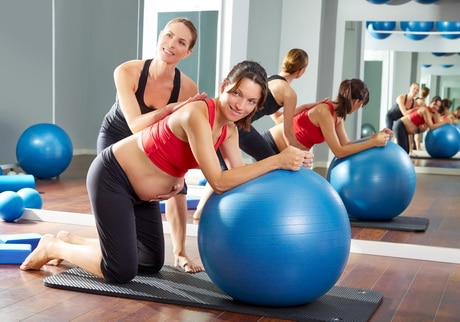
The benefit of Pilates’ movement therapy exercises for women thru pregnancy and post-partum is mostly misunderstood. Simply put, Pilates is a safe and effective approach to exercise for pregnant women to assist with breathing, body alignment and to recover body shape and tone after birth.

Pilates focuses on breathing, which promotes relaxation and helps activate the transversus abdominus. The transversus abdominus is the deepest of the abdominal muscles and is responsible for supporting the lumbar spine and pelvic area at a time when ligaments are lax due to the natural hormone relaxin excreted by the body during the pregnancy and nursing stages. Lateral breathing also inherent in Pilates fitness, which improves rib cage mobility when the range of motion in the diaphragm is limited due to the high position of the baby in the third trimester.

Back pain is a common side effect of pregnancy. Unless the abdominal muscles, pelvis and spine are strengthened, problems with the back can occur. Strengthening the transversus abdominus (“abs) through guided Pilates movements will not only improve back pain and postural alignment, but will aid women during labor for a much quicker & safer delivery. Research has shown that activation of the transverses abdominus also activates the pelvic floor, keeping these muscles strong and supple for the birthing process. This can also help with any incontinence that you may experience during and after pregnancy.

The nature of movement in Pilates exercise is low impact and allows pregnant women to exercise effectively without experiencing any undue stress on the now lax joints, or an increased heart rate. Pilates also involves many stretching and toning exercises that helps to maintain hip flexibility and stamina, which is essential for well-being and preparation for childbirth. These exercises are aided and supported by Pilates apparatuses such as the reformer: a moving carriage on a bed; the wunda chair with springs to create resistance and the trapeze table to hang from. Pilates exercises also can be performed on a mat with small props such as pillows or cushions which supports the head, the magic circle, foam rollers and therabands for extra resistance.

Most exercise modifications happen during the second and third trimester due to the ever-increasing belly. All Pilates movements, at this point are best done seated up right or side lying. However, you can work supine as long as the head is elevated with pillows at 30 degrees above the heart for no longer than 5 minutes, turning to the side for a break. This ensures natural blood flow and oxygen to the A popular exercise among pregnant Pilates enthusiasts is legwork on the wunda chair. It involves sitting on a small stool with springs attached to a lever and pushing the lever down with your feet. This Pilates movement provides conditioning for the legs and activation of the abdominal muscles, which stabilize the pelvis.

Remember it’s very important that your Pilates instructor is certified and has experience in working with pregnant women.

Asthma Relief Forever™

Asthma Relief Forever™

HOT TOPICS

POPULAR ARTICLES

RANDOM ARTICLES

Copyright © HealthYards.com.com -  All rights reserved.